Introduction
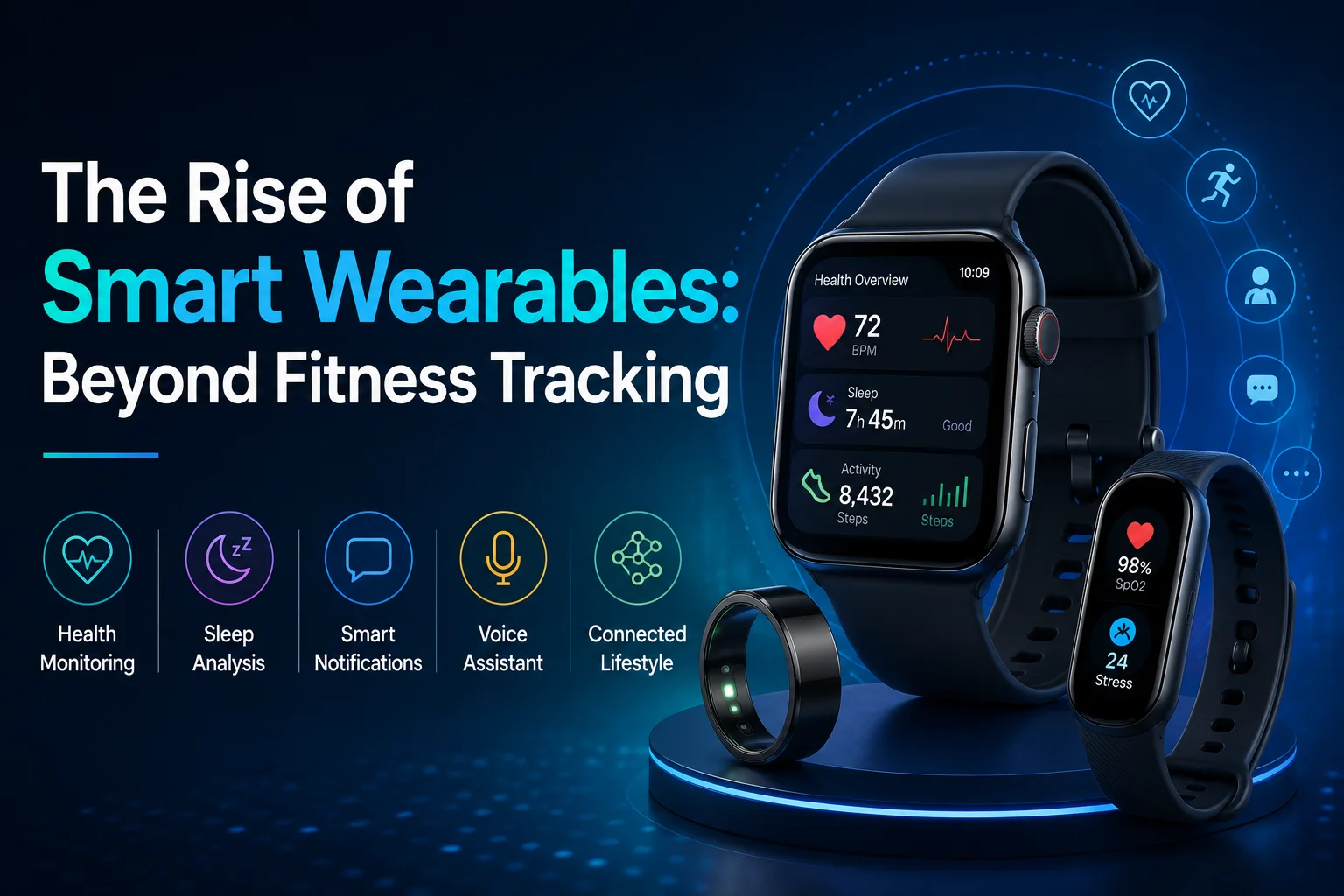
Smart wearables have evolved far beyond counting steps and tracking workouts. Today, wearable technology is becoming a larger part of daily life by combining health insights, connectivity, and convenience into compact devices.
From smartwatches to intelligent rings and wearable sensors, the market continues expanding rapidly.
From Accessories to Everyday Technology
Early wearable devices mainly focused on notifications and activity tracking.
Modern wearables now provide:
- Health monitoring
- Productivity tools
- Communication features
- Smart ecosystem integration
As hardware improves, wearable technology becomes more capable.
Health and Wellness Applications
One of the biggest growth areas remains personal health.
Smart wearables increasingly support:
- Heart rate monitoring
- Sleep analysis
- Activity tracking
- Wellness insights
Many users rely on these devices to better understand daily habits.
Better Connectivity Across Devices
Wearables are becoming extensions of smartphones.
Connected ecosystems allow:
- Device synchronization
- Smart notifications
- Voice interaction
- Seamless control
This may reduce dependence on constantly using phones.
Challenges for Growth
Despite progress, challenges remain:
- Battery limitations
- Privacy concerns
- Device compatibility
- Cost considerations
Conclusion
Smart wearables are gradually moving beyond fitness into becoming practical everyday technology. Future innovation may focus on making devices smarter, smaller, and more connected.

Najaf Sial is the Owner and Lead Writer at WormZone.in, covering the latest updates across technology, science, gadgets, cybersecurity, and global trends. With a passion for digital innovation and clear, factual reporting, Farhat brings readers insightful and trustworthy news from around the world.